
Porto Tycoon: from a broken pier to a full port
How we made our port tycoon on Roblox: the crane mini-game, the starting island, the storm and an economy measured by playing, not guessing.
Porto Tycoon is our port tycoon on Roblox. You start on a broken wooden pier with nothing in your pocket and end up owning a port with cranes, a train and customs. The first Roblox Studio screenshots are from October 19, 2026, and the game launched on the 24th.
The idea
The money comes from working the port. You unload ships in a crane mini-game, dropping the cargo when the ship is in the green zone, carry crates and containers to the warehouse and the yard, and the trucks and the train sell the cargo. With what you earn, you buy the buttons that build the port in four phases: dockworkers, forklifts, cranes, berths, customs and the train.
One week, day by day
- October 19: the crane, the unloading mini-game and the rebirth screen.
- October 20: the last phase of the port, with dredging, customs and the train.
- October 21: five themes for the plot: classic, tropical, ice, volcanic and futuristic.
- October 22: the interface redesigned screen by screen.
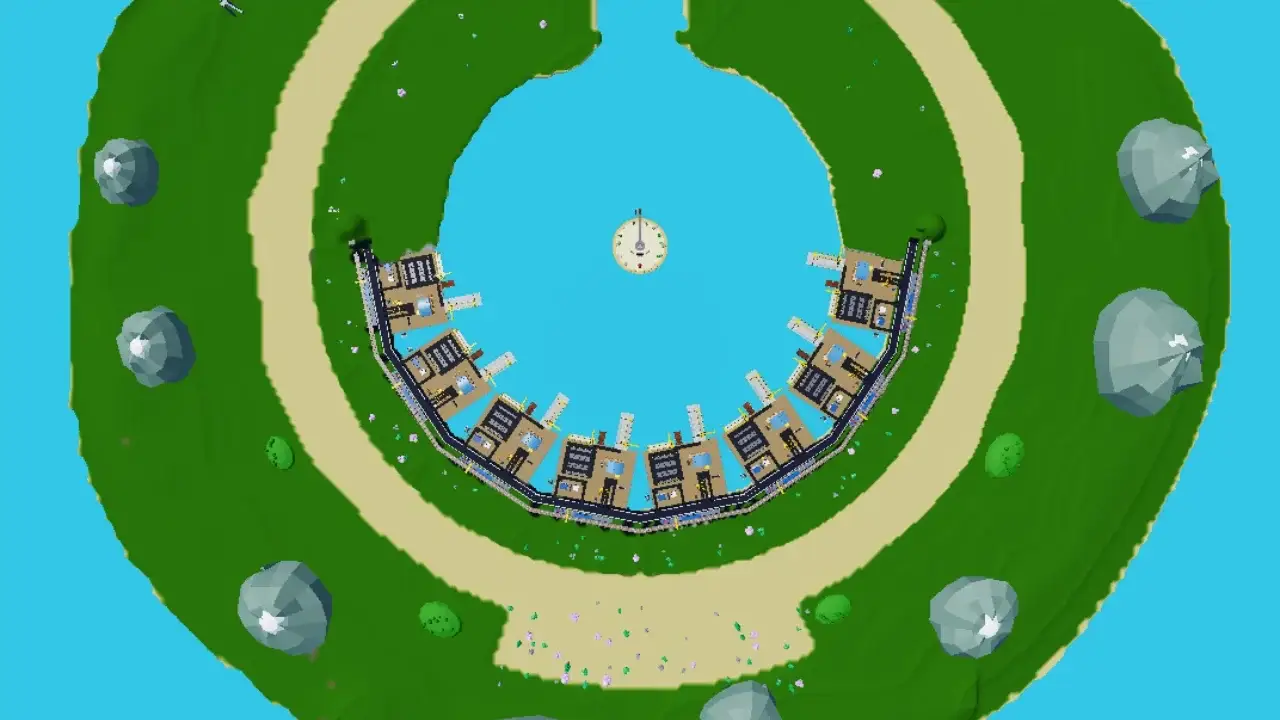
- October 23: the starting island, where new players meet Seu Zé and take the ferry to the port, and the storm, where you have to tie down the yard stacks before the wind knocks everything over.
- October 24: one crane per berth, to unload several ships at once, the phone and console version, and the launch.
An economy measured by playing
The goal was 90 to 110 minutes from zero to finishing the last phase. Playing for real, it took about 106 minutes. Along the way, the train went from carrying 14 containers to 18, because sales were not keeping up with what the port produced.
Rebirth always starts from zero, with 25% more money each time, and its price is worth about 45 minutes of income.
Light on phones
To run well on any device, the parts that cast shadows went from 7,592 to about 1,600, and phones got their own interface.